
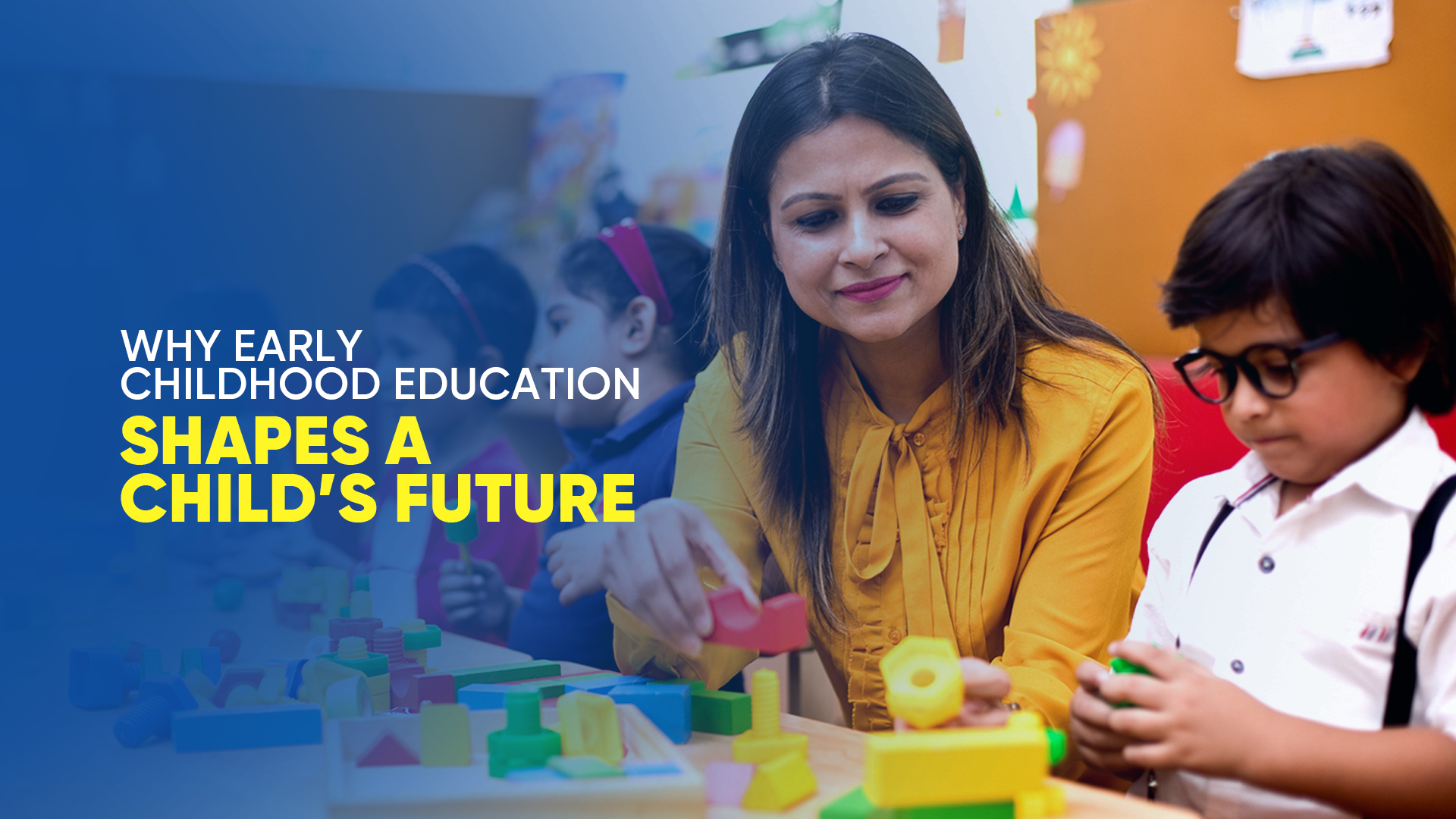
Why Early Childhood Education Shapes a Child’s Future
Early childhood education shapes a child’s future because the first years build the base for learning, confidence, communication, emotional strength, social behaviour, and school readiness. A child does not begin learning only after entering primary school. Learning starts much earlier through play, conversation, movement, stories, colours, routines, and everyday experiences.
For parents searching for the best early childhood education in Boduppal, the real question is not, “How early will my child start academics?” The better question is, “Will my child learn in a way that feels natural, joyful, and developmentally right?”
At Kiran International School, Boduppal, early education focuses on helping children grow with confidence, curiosity, discipline, and emotional security.
What is early childhood education?
Early childhood education is the structured learning and development support children receive during their early years, especially from preschool to the beginning of primary school. In India, the National Education Policy places ages 3 to 8 under the foundational stage, where children learn best through play-based, activity-based, and discovery-based methods.
This stage is not about forcing young children into heavy textbooks or long writing tasks. It helps them develop language, thinking skills, motor skills, social habits, emotional balance, and early numeracy in a simple and meaningful way.
A good pre-primary program gives children freedom to explore while teaching routines, responsibility, and respect.
Why are the early years important for brain development?
The early years are powerful because a child’s brain develops rapidly during this stage. UNICEF explains that in the first few years of life, more than one million neural connections form every second, making early experiences important for future learning and behaviour.
This means every story, song, puzzle, conversation, game, and classroom interaction helps build the brain. With the right support, children develop memory, attention, language, creativity, and problem-solving skills.
Early childhood education gives children these experiences in a guided and age-appropriate way. It helps them observe, ask, think, try, fail, and try again.
How does early education improve communication skills?
Communication is one of the most important outcomes of early childhood education. Before children read and write confidently, they must learn to listen, speak, describe, question, and express feelings.
In a strong preschool environment, teachers use rhymes, stories, picture reading, role play, show-and-tell activities, and group conversations to build language skills. Children slowly learn new words, clearer pronunciation, and confident expression.
This matters because communication affects every part of learning. A child who can express a doubt, ask for help, explain an idea, or speak in front of classmates becomes more active in the classroom.
How does preschool build social skills?
For many children, preschool is their first regular experience outside the home. They meet teachers, interact with classmates, share toys, wait for turns, follow routines, and participate in group activities.
These moments build social confidence. Children learn how to listen, cooperate, adjust, respect others, and solve small conflicts. They understand that a classroom is a shared space where everyone matters.
Social skills cannot be developed through worksheets alone. They grow through real interaction. That is why group play, circle time, teamwork activities, and guided routines are important.
How does early childhood education support emotional growth?
A child learns best when the child feels safe. Emotional security is one of the strongest foundations of learning. When teachers respond with warmth, patience, and encouragement, children feel comfortable trying new things.
Young children may feel shy, excited, upset, nervous, or frustrated. A good early learning environment helps them name these emotions, manage them, and express them in healthy ways. Children learn that mistakes are not scary. They learn that asking for help is normal.
This emotional strength helps children adjust better in higher classes. It also builds confidence, resilience, and independence.
Why is play-based learning important?
Play is not time away from learning. For young children, play is the most natural form of learning.
When children build blocks, they learn balance, size, shape, and patience. When they draw, they improve creativity and fine motor control. When they pretend to run a shop, they learn language, counting, social roles, and imagination. When they play outdoors, they develop coordination, teamwork, and confidence.
Play-based learning keeps children engaged because it matches how their minds work. It makes learning active instead of stressful. It also helps children understand concepts deeply instead of memorizing them for a short time.
How does early education prepare children for primary school?
Early childhood education prepares children for formal schooling in a gentle and structured way. Children learn classroom habits before academic pressure increases.
They learn how to sit for short periods, listen to instructions, complete simple tasks, hold pencils, identify letters, recognize numbers, follow routines, care for belongings, and interact respectfully with teachers and classmates.
This readiness reduces fear when children enter higher classes. They already understand how school works. They feel more confident, independent, and prepared.
Parents often look for academic preparation, but school readiness is broader. It includes emotional readiness, social readiness, physical readiness, and communication readiness.
What role do teachers play in early childhood education?
Teachers play a central role in shaping a child’s first learning experience. In the early years, a teacher is not only a subject instructor. A teacher is a guide, observer, motivator, caregiver, and confidence builder.
Good teachers understand that every child develops at a different pace. Some children speak early. Some need more time. Some enjoy group activities. Some prefer quiet observation.
A skilled teacher notices these differences and supports each child with care. This personal attention helps children feel valued and understood.
What should parents look for in a pre-primary school?
Parents should choose a school that balances safety, care, activity-based learning, communication skills, discipline, creativity, and academic readiness.
A good pre-primary school should have child-friendly classrooms, trained teachers, clean facilities, safe play areas, meaningful activities, regular parent communication, and a warm learning environment.
Parents can ask simple questions before choosing a school:
Does the school use play-based learning?
Are children encouraged to speak and ask questions?
Do teachers focus on emotional comfort?
Is there a balance between learning and play?
Does the school help children become independent?
These answers help parents understand whether the school is truly right for early learners.
Why choose Kiran International School, Boduppal?
Kiran International School, Boduppal, supports early learners with a nurturing and structured environment. The school focuses on helping children build strong foundations through guided learning, communication, creativity, discipline, and holistic development.
For parents looking for a CBSE school in Boduppal with strong early childhood education, Kiran International School offers a child-friendly learning space where children can begin their journey with confidence.
The school understands that early education should not rush childhood. It should shape it with care.
Final thoughts
Early childhood education shapes a child’s future because it builds the foundation for everything that follows. It influences how children think, speak, behave, learn, and connect with others.
A strong early start helps children become curious, confident, independent, and emotionally secure. It prepares them for academics, friendships, discipline, problem-solving, and life skills.
At Kiran International School, Boduppal, early childhood education is designed to help every child learn with joy, grow with confidence, and step into the future with a strong foundation.