
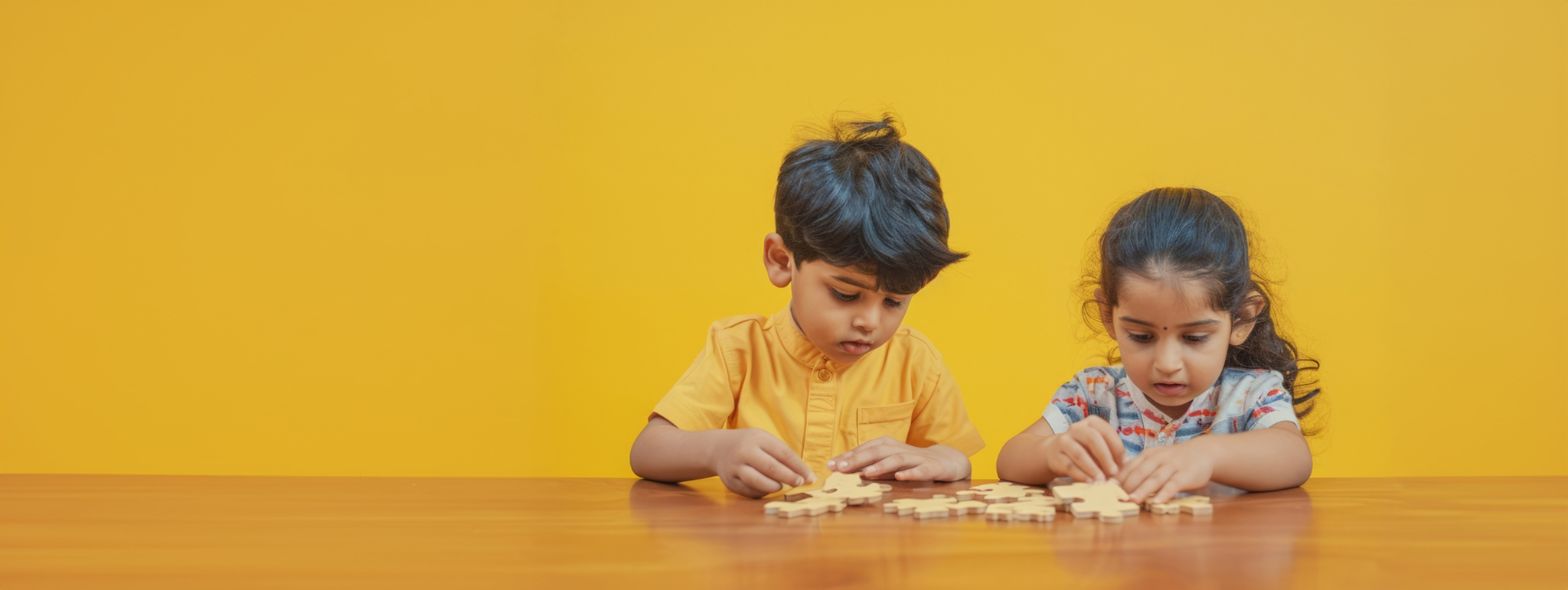
Starting primary school is one of the biggest milestones in your child’s early years. That first day — the new bag, the unfamiliar classroom, the sea of unknown faces — can feel thrilling and terrifying all at once, for both your child and you.
The good news? Research consistently shows that children who are prepared — not just academically, but emotionally, socially, and physically — make the transition far more smoothly. At Kiran International School, one of the leading CBSE schools in Boduppal, Hyderabad, we work closely with families every year to help children arrive on Day One feeling confident, curious, and ready to grow.
This guide covers everything you need to know — practical, actionable, and grounded in what actually works.
What Does “School Ready” Really Mean?
Many parents assume “school ready” means knowing the alphabet, counting to 20, or recognising shapes and colours. While those skills are helpful, they are not the priority.
Primary school teachers consistently say the children who settle fastest are the ones who can:
- Follow simple instructions
- Manage their own basic self-care
- Express their feelings and needs in words
- Cope with short periods of separation from parents
- Play and interact cooperatively with other children
These are the real pillars of school readiness — and every single one of them can be built at home, starting now.
1. Build Independence Through Daily Self-Care
Before your child can thrive in a classroom of 25 students, they need to feel capable of managing themselves. This is less about being “grown up” and more about confidence — the quiet self-assurance that comes from handling small tasks on one’s own.
Start practising these skills at least 4–6 weeks before school begins:
- Dressing: Can your child button a shirt, zip a bag, and put on their shoes? These sound minor, but in a busy morning routine, not being able to do them creates daily frustration.
- Toilet independence: Ensure your child can manage the bathroom routine alone — including washing their hands with soap.
- Opening containers: Practice opening the tiffin box, water bottle lid, and snack pouches independently. Many children arrive at lunch unable to open their own food.
- Organising belongings: Teach them to put their notebook in their bag, hang their water bottle on a hook, and identify their own things by their name label.
Pro Tip from KIS educators: Label every single item — water bottle, lunch box, shoes, sweater. Children this age cannot always remember which identical blue bottle is theirs, and named labels prevent daily confusion and tears.
2. Develop Emotional and Social Readiness
Social and emotional intelligence is arguably more important than any academic skill at this age. Primary school is often the first setting where a child must navigate a complex social world — sharing attention, taking turns, managing disappointment, and making new friends — all without Mummy or Daddy nearby.
Helping Your Child Manage Separation
Separation anxiety is completely normal. It affects many children (and parents) during the first few weeks. Here is how to make drop-off easier:
- Create a goodbye ritual. A specific hug, a special handshake, or a simple phrase like “I’ll be here at 3 o’clock” gives your child a predictable anchor. Keep it short and warm — lingering increases anxiety rather than reducing it.
- Speak positively about school. Avoid using school as a threat (“The teacher will be angry if you do that”). Instead, describe school as a place where exciting things happen.
- Read books about starting school. Stories like The Kissing Hand (by Audrey Penn) or Starting School (by Janet and Allan Ahlberg) help children understand the experience before it happens.
Building Social Skills at Home
- Arrange playdates with other children before school starts, particularly with future classmates if possible.
- Play board games as a family where rules must be followed and “losing” is part of the experience.
- Role-play social scenarios: “What would you say if you wanted to join someone’s game?” or “What would you do if someone took your pencil?”
- Practise greetings: “Hi, my name is [Name]. Do you want to play?” is a powerful script for a 5-year-old.
3. Strengthen Communication and Language Skills
In a primary classroom, your child needs to be able to listen attentively, follow multi-step directions, and express their own needs clearly. Language is the bridge between your child and their teacher.
Listening and Following Instructions
- Play “Simon Says” — it’s an excellent game for practising multi-step listening (e.g., “Simon says: clap your hands, turn around, and sit down”).
- Read aloud together every day. This builds vocabulary, attention span, and listening skills simultaneously. Ask questions like: “What do you think will happen next?” or “How do you think the character is feeling?”
- Narrate daily activities and invite your child to do the same. “I’m putting the dishes away. What are you doing?”
Expressing Needs
Encourage your child to use full sentences when expressing needs or feelings:
- “I need to use the washroom.”
- “I don’t understand what to do. Can you explain again?”
- “I am feeling upset because…”
Children who can articulate their needs to a teacher get support far more quickly than those who cannot.
4. Develop Fine and Gross Motor Skills
Physical readiness for school is often overlooked, but it matters enormously — particularly for writing readiness and playground confidence.
Fine Motor Skills (for Writing Readiness)
The muscles in a young child’s hand need to be strengthened before they can hold a pencil comfortably for extended periods. Build hand strength through:
- Playdough and clay modelling
- Tearing, folding, and cutting paper with safety scissors
- Threading beads or lacing cards
- Colouring and drawing
- Picking up small objects like buttons, coins, or dried lentils with fingers
Children with strong fine motor skills transition to formal writing far more easily and with less fatigue.
Gross Motor Skills (for Playground and PE)
Regular outdoor play — running, jumping, climbing, balancing, throwing — develops coordination, spatial awareness, and physical confidence. A child who feels capable on the playground is a happier, more settled child in the classroom.
5. Cultivate Curiosity Over Rote Academic Knowledge
Here is the truth most parents need to hear: your child does not need to know how to read or write before starting primary school. The CBSE curriculum is designed to teach these skills from the beginning.
What matters far more than rote knowledge is a genuine curiosity about the world and the confidence to ask questions.
Nurture the “Why?” Stage
When your child asks “Why is the sky blue?” or “How do worms breathe?” — engage with them. Look up the answer together. This teaches them that questions are valuable, that learning is a conversation, and that they are capable of understanding complex things.
Contextual Numeracy (Better Than Flashcards)
Instead of rote counting drills, build number sense through everyday life:
- Count the steps up to your door.
- Divide biscuits equally between family members.
- Ask “Who has more?” or “How many more do we need?”
This approach builds “one-to-one correspondence” — the understanding that numbers represent real quantities — which is the actual foundation of mathematical thinking.
Pre-Literacy at Home
- Visit the library or bookshop together and let your child choose books they want.
- Point to words as you read so they understand that text is written speech.
- Teach them to recognise and write their own name — this builds ownership and identity in the classroom.
6. Establish a Consistent Daily Routine
Young children thrive on predictability. A stable routine reduces anxiety because your child always knows what comes next. Start building school-aligned rhythms at least 2–3 weeks before the first day.
Sleep
Children aged 5–7 need 10–12 hours of sleep per night. If your child currently sleeps late, shift their bedtime earlier by 15 minutes every few days to avoid a sudden, stressful adjustment.
A tired child struggles to regulate emotions, focus, and absorb new information — none of which makes for a good first week.
Morning Routine
Practise the morning sequence in a relaxed, non-rushed way:
- Wake up at school time
- Wash face and brush teeth
- Get dressed independently
- Eat breakfast
- Pack bag together
The goal is to make these steps feel automatic before the first stressful real-school morning.
Lunchtime Practice
If your child will bring a tiffin box to school:
- Practise eating within a set time (most schools allow 20–30 minutes for lunch).
- Ensure they can open all containers independently.
- Discuss what to do if they spill something — normalise small accidents so they are not catastrophic in the moment.
7. Prepare Yourself as a Parent
Your child reads your emotional state. If you are visibly anxious at drop-off, they will feel it. If you speak about school with excitement, they will absorb that too.
A few things that genuinely help:
- Visit the school before term starts if the school allows it. Familiar spaces are less intimidating.
- Meet the teacher if possible. A face-to-face connection before the first day helps both you and your child.
- Talk to other parents. Knowing that other children also cry at drop-off in week one — and that it passes — is enormously reassuring.
- Trust the process. Teachers manage transitions all the time. Within a few weeks, most children are settling in, making friends, and telling you they want to go back.
A Week-by-Week Countdown: 4 Weeks Before School Starts
Week | Focus Area |
Week 4 | Adjust sleep schedule; begin practising self-care tasks |
Week 3 | Practise morning routine; read school-themed books |
Week 2 | Visit the school campus; rehearse the goodbye ritual |
Week 1 | Prepare school bag together; label all items; low-key excitement building |
Final Word
Preparing your child for primary school is not about creating the perfect student — it is about building a confident, curious, and resilient little person who is ready to explore the world beyond your home.
The skills that matter most — the ability to manage their own needs, to make friends, to ask for help, to handle frustration, and to try again after failing — are built through thousands of small moments in everyday life.
At Kiran International School, we believe that every child arrives ready to learn in their own unique way. Our role — and yours — is simply to make sure they feel safe enough to try.
Ready to take the next step? Enquire about admissions at Kiran International School, Boduppal →