
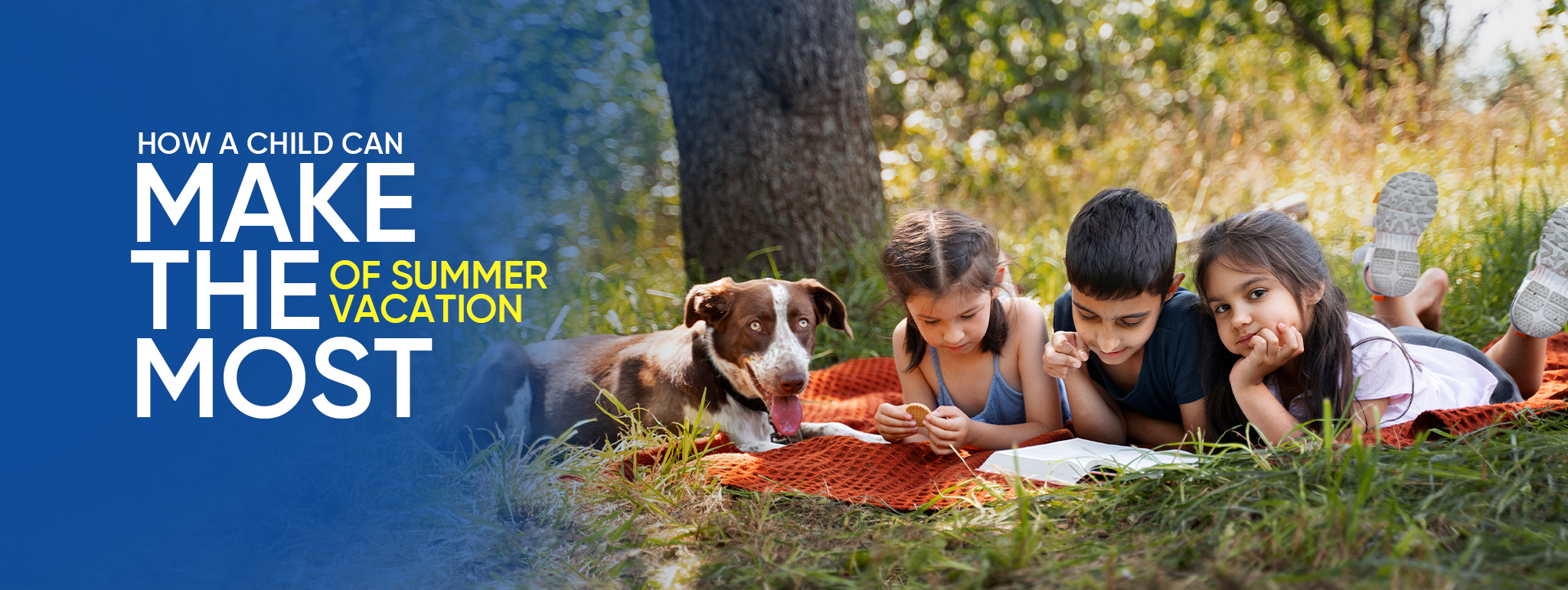
Summer vacation is the best time for children to rest, recharge, explore new interests, build life skills, and continue learning in a relaxed way. A child can make the most of summer vacation by balancing fun, reading, physical activity, creativity, family time, skill development, and a simple daily routine.
For parents, summer should not become only screen time or only academic pressure. The goal is to help children enjoy their break while staying active, curious, confident, and ready for the next academic year.
Why Is Summer Vacation Important for Children?
Summer vacation gives children a much-needed break from regular school schedules, exams, homework, and daily academic pressure. It allows them to slow down, spend time with family, play outdoors, and discover interests beyond textbooks.
But a long break should not mean a complete break from learning. Children can forget academic concepts when they stay away from reading, writing, and problem-solving for too long. This is often called summer learning loss or the summer slide. Research discussions show that learning loss can vary by grade, subject, and home environment, but consistent reading and engaging activities can help children stay prepared.
The best summer plan is simple: let children enjoy their holidays while keeping their minds and bodies active.
What Should a Good Summer Vacation Routine Include?
A good summer vacation routine should include learning time, outdoor play, creative activities, reading, rest, family bonding, and limited screen time.
Children do not need a strict school-like timetable during summer. Instead, they need a flexible routine that gives structure without taking away the joy of vacation.
A balanced summer day can include:
- Morning physical activity
- Reading or writing time
- One creative or skill-based activity
- Household responsibility
- Free play
- Family conversation
- Adequate sleep
This kind of routine helps children feel organized, independent, and emotionally balanced.
How Can Children Continue Learning During Summer?
Children can continue learning during summer through reading, puzzles, educational games, journaling, experiments, storytelling, and real-life activities.
Learning does not always need worksheets. A child can learn math through shopping calculations, science through gardening, language through story writing, and general knowledge through museum visits or documentaries.
Parents can ask children to maintain a simple summer journal. They can write about what they did, what they learned, what they observed, and what they want to try next. This improves writing skills, observation, vocabulary, and self-expression.
Even 30 minutes of meaningful learning every day can help children stay connected to academics without feeling stressed.
Why Should Reading Be a Daily Summer Habit?
Reading is one of the easiest and most effective ways to keep a child’s mind active during vacation. It improves vocabulary, imagination, concentration, comprehension, and communication skills.
Children can read storybooks, biographies, comics, magazines, newspapers, or age-appropriate articles. The format matters less than the habit. When children read regularly, they become better thinkers and better speakers.
Parents can make reading enjoyable by allowing children to choose books based on their interests. A child who likes animals can read wildlife stories. A child who likes space can read about planets. A child who likes sports can read athlete biographies.
Reading should feel like discovery, not punishment.
How Can Outdoor Play Help During Summer Vacation?
Outdoor play is essential during summer because it supports physical health, confidence, teamwork, and emotional well-being. Children and adolescents need at least one hour of physical activity every day, according to the CDC.
Outdoor games such as cycling, running, badminton, football, swimming, skipping, or simple group games help children stay active. They also reduce boredom and improve mood.
Physical activity teaches children discipline, patience, coordination, and resilience. When children play with others, they also learn sharing, leadership, and teamwork.
Parents should encourage safe outdoor play during cooler hours of the day, especially in summer.
How Can Children Use Screen Time Wisely?
Screen time should be balanced, not completely uncontrolled. Children can use screens for learning, creativity, and communication, but too much screen time can affect sleep, physical activity, focus, and social interaction.
Experts warn that excessive screen use can interfere with important developmental activities such as exercise, family interaction, and learning-based play.
Parents can set clear screen-time rules. For example, children can use screens after reading, outdoor play, or completing a creative activity. They can watch educational videos, learn coding, practice language skills, explore art tutorials, or attend online skill classes.
The key is to shift screen time from passive watching to purposeful learning.
What Skills Can Children Learn During Summer Vacation?
Summer vacation is a great time to learn life skills and creative skills. These skills build independence and confidence.
Children can learn:
- Basic cooking
- Gardening
- Art and craft
- Music
- Dance
- Public speaking
- Coding
- Chess
- Storytelling
- Swimming
- Time management
- Money management
- Household
- responsibility
Skill learning helps children understand that education is not limited to school subjects. It also teaches patience, problem-solving, and self-discipline.
Parents should allow children to choose at least one skill they genuinely enjoy. When children choose, they participate with more interest.
How Can Summer Vacation Improve Creativity?
Creativity grows when children get time to imagine, experiment, and create without pressure. Summer gives children that space.
They can draw, paint, write stories, make models, create videos, build with blocks, design posters, or prepare small performances. Creative activities improve thinking, confidence, and emotional expression.
Parents do not need to judge every output. A child’s drawing does not have to be perfect. A story does not have to be polished. The purpose is expression.
When children create freely, they become more confident in sharing ideas.
How Can Parents Make Summer More Meaningful?
Parents can make summer meaningful by spending quality time with children. Family conversations, short trips, cooking together, storytelling nights, board games, and shared reading can create strong memories.
Children remember emotional experiences more than expensive activities. A simple evening walk with parents can be more valuable than a full day of screen entertainment.
Parents can also involve children in household tasks. Simple responsibilities like watering plants, arranging books, helping in the kitchen, or organizing their room teach discipline and ownership.
Summer should help children feel loved, heard, and responsible.
How Can Children Build Better Habits During Summer?
Summer vacation is a good time to build habits that are difficult to focus on during busy school days.
Children can improve sleep routines, reading habits, fitness, handwriting, communication, prayer or mindfulness, cleanliness, and personal organization.
A habit tracker can make this fun. Parents can create a weekly chart with simple goals such as “read for 20 minutes,” “play outdoors,” “help at home,” and “sleep on time.”
Children feel motivated when they see their progress. Small daily habits create long-term growth.
How Can Summer Vacation Prepare Children for the Next Academic Year?
Summer can help children enter the next academic year with confidence. Instead of waiting until school reopens, parents can gently revise previous lessons and introduce basic concepts from the upcoming grade.
This should not become pressure. Short revision sessions, educational games, reading practice, and writing activities are enough.
Children can also organize their books, clean their study space, set goals, and talk about what they want to improve in the next year.
A child who returns to school with a calm mind and active routine adjusts faster.
What Should Children Avoid During Summer Vacation?
Children should avoid spending the whole day on screens, sleeping too late, skipping physical activity, eating unhealthy food regularly, and completely disconnecting from learning.
They should also avoid overpacked schedules. Too many classes can make summer feel stressful. Children need free time to relax, think, and play.
The goal is balance. A good summer vacation should include both rest and growth.
How Schools Can Support Productive Summer Learning
Schools can guide parents and students with reading lists, activity suggestions, creative assignments, project ideas, and skill-building recommendations. A good school encourages children to use summer as a time for exploration, not just homework completion.
At Kiran International School, the focus is on holistic growth. Children are encouraged to develop academically, socially, physically, creatively, and emotionally. This approach helps students see learning as an everyday habit, not just a classroom activity.
For parents looking for a CBSE school in Boduppal, Uppal, or Hyderabad, this balance matters. A strong school should support both academic excellence and overall personality development.
Final Thought
A child can make the most of summer vacation by following a balanced routine that includes rest, reading, outdoor play, creativity, skill development, family time, and light academic practice.
Summer should not be wasted, but it should not become stressful either. It should help children return to school healthier, happier, more confident, and more curious.
When parents guide children with the right balance, summer vacation becomes more than a break. It becomes a season of growth.